Why Rapid Gravity Filter (RGF) performance declines and cleaning matters
Iron and manganese biofouling builds up in the narrow flow channels of filter nozzles and mesh floors, restricting flow in both directions. As blockages accumulate, backwash and air scour capability is reduced — and biofouling on the media itself gradually increases, compounding the performance loss. The result is higher head-loss, reduced flow rate, filter performance and filters that need more frequent and more expensive maintenance.
Left unaddressed, the problem compounds further. As nozzles and underdrains become increasingly restricted, the backwash pressure required to achieve adequate cleaning rises — placing growing structural strain on the filter floor, nozzles and underdrain system. Over time this elevated pressure can cause physical damage to these components, turning a performance issue into a costly structural repair.
The conventional fix is to replace the media and fittings entirely — a process that's costly, time-consuming and disruptive to plant operations. Pantonite's in-situ cleaning method takes a different approach: flushing and cleaning the existing media, underdrains, nozzles and fittings in place, restoring flow and filter performance before pressure-related damage occurs.
With or without media
media and underdrain can be cleaned together or just the underdrain alone
Lower cost
Significantly cheaper than full media and floor/nozzle replacement
Reduce downtime
Low disruption process minimises operational interruption particularly if media remains in place
How it works
1
Assessment
Every filter bed and treatment plant setup is different. We can guide your contractor to assess your filter type, clogging severity, and configuration to develop the right cleaning approach for your system.
2
Treatment
The bed is isolated from the plant and Pantonite is applied through a sophisticated flushing-in-place process, targeting the critical problem areas of the filter bed-media, underdrains, nozzles, and other fittings while minimising the chemical required and waste generated.
3
Flush and Verification
The bed is flushed until pH returns to original levels. Once reconnected, flow rate, head loss, and backwash performance are checked to confirm restored filter capability.
Don't just take our word for it
In this video - Jason McCarthy of Danvers Water Department, MA, and Chris Patterson (his Contractor at that time) tell us how well the Pantonite process worked on the Danvers rapid gravity filters.
Why contractors and utilities choose Pantonite for RGF re-development
No media replacement
Clean media, underdrains, nozzles and fittings in place — no need to remove or replace

Reduce downtime
Improves backwash and air scour efficiency by clearing flow-restricting blockages

Lower cost
Significantly cheaper than the cost of full media and fittings replacement
Restored Performance
Low-pressure, low-disruption process minimises operational interruption
Results you can see
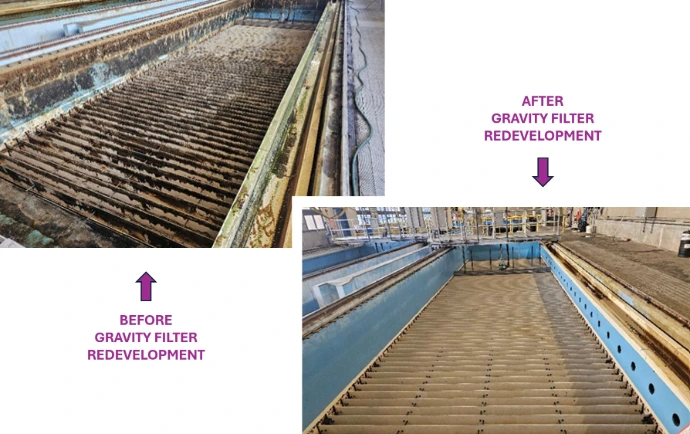
Filter bed restoration before and after Pantonite treatment
Empty Filter bed before and after Pantonite treatment
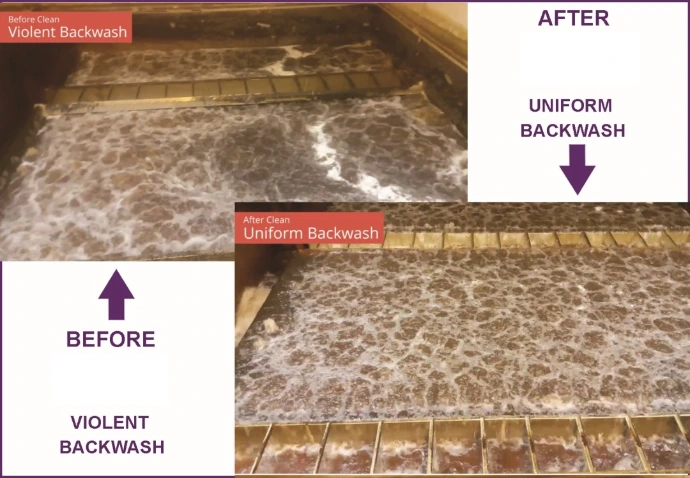
Filter backwash performance before and after Pantonite treatment
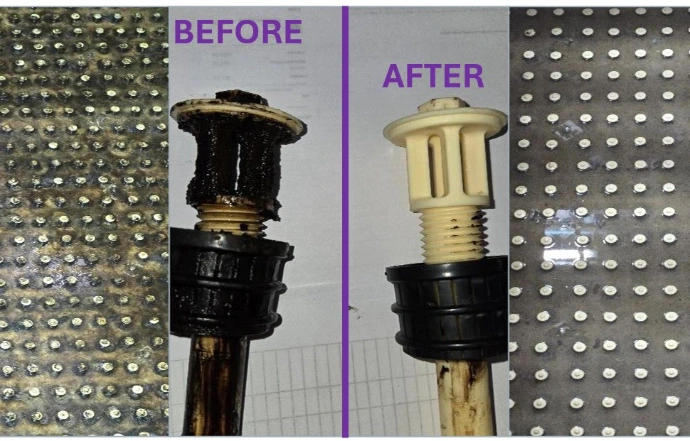
Filter nozzles before and after Pantonite treatment
See the evidence for yourself
At a treatment facility in Ashland, MA, groundwater-supplied filters were affected by nozzle blockages containing a high concentration of organic manganese.
(See nozzles in Before and After pics above).
This was leading to a 60% decline in influent flow rate on both clarifiers and the pressure relief valves for the blowers being set off early. There was also a 33% increase in pressure when the clarifier was online, an uneven blanket of air across the floor during the air scour process and increased risk of blowing up the clarifier floor during an air scour due to high pressure consolidated in one area.
The Pantonite enhanced redevelopment process doubled the flow rate of the filter bed and provided a saving of over 92% compared to a quote from another contractor for a full nozzle and media replacement proposal.